
Login
Search
Lexicon
Children's Flowers


Who is online
We have 7 guests and no members online
Latest Blogs

Latest Comments
HSP-Mix


- Details
- Category: Other combinations
- Hits: 562
Hypersensitivity and flower essences
Do you know what a HSP is? A term that was introduced into psychology in the mid-90s by the American psychologist Elaine N. Aron. HSP means „highly sensitive person“. This refers to those people whose nervous system is overactive, which are extremely sensitive and responding even to the finest stimuli. What brings them a lot of stress. Quite normal stimuli of the outside world can overwhelm them. Background noises that less sensitive people simply miss are not only audible over to the HSPs but drill into the ear canal, so they need all their power just to focus on their current activity. They are involved in a constant internal struggle, simple errands can be enormously stressful, because they feel that there is alway so much noise around. And not just noise, smells can have a similar impact. Everything they notice seems more intense as if they were using an internal amplifier.

Therefore, most of them are constantly on the run, overwhelmed and exhausted. And on top of that are teased, the term „sensitive soul“ means hardly anything positive. Rather: the crybaby. In a world that places more emphasis on the elbow than on sensitivity, they are regularly among the losers. Not because they are weak or stupid, but because they are overwhelmed by external stimuli, retreat from the hustle and bustle in order to internally recharge, and have less stamina. Much of their energy is spent for pulling themselves together.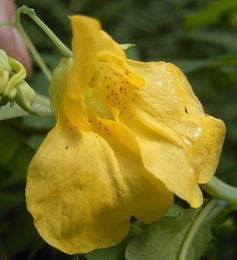
Touch-Me-Not Balsam - Confidence in yourself and others
The lesson that life gives them is: to learn how to protect themselves,save their energy for the important things, and stay themselves in a seemingly overwhelming environment.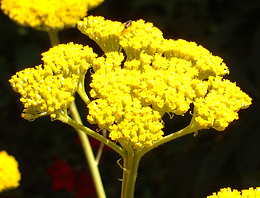
Yellow Yarrow - Resist the urge to retreat
Regarding hypersensitivity science is still in its infancy, many theories are based more or less on wishful thinking and mental associations, meanwhile, a definition of a mental disorder or illness is (so far) refused. At least it seems striking that the phenomenon runs in families, suggesting a hereditary origin. Elaine Aron claims that up to 20% of the population were „highly sensitive persons“.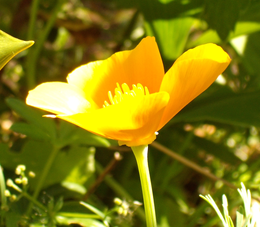
California Poppy - Calms nervousness, especially if you paradoxically seek even more stimulating situations
Wikipedia offers the following explanations for the phenomenon of high sensitivity :
„The parts of the brain and neural networks, which are responsible for the attenuation of the excitatory potentials are, for some (probably genetic) reasons trained less, so that the excitation of the cerebral cortex is significantly higher than for other individuals.
In highly sensitive people (HSP) the thalamus functions in a different way than in non-highly sensitive people, so that more stimuli are classified as „essential“ and thus reach the consciousness. There are also organic information that can be interpreted as increased thalamic activity: The phenomena described by Aron as increased cortisol levels, increased sensitivity to lack of sleep, caffeine, hunger and thirst relate to the hypothalamus.“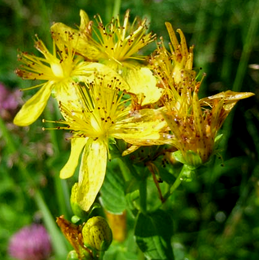
St. John‘s Wort - If you will notice more than others
Michael Jack, president of the Information and Research Association high sensitivity society (IFHS) admits that „high sensitivity is not scientifically recognized“.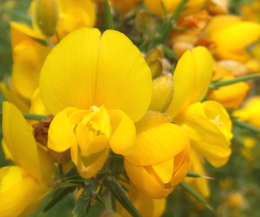
Gorse - Do not give up
For highly sensitive people I have compiled the following flowers recipe:
- Touch-Me-Not Balsam - Impatiens noli-tangere
Brings confidence in yourself, in nature and the people - Yellow Yarrow - Achillea filipendula
Brings strength, when you tend to withdraw. - California Poppy - Escholtzia californica
Relieves nervousness, brings peace and self-knowledge - St. John‘s Wort - Hypericum perforatum
Ensures ease and confidence - Gorse - Ilex europaeus
Relieves depression and brings the confidence I‘ll make it!
Five yellow flowers, which all have effect on the solar plexus. They help the HSP to stay calm, to increase the stimulus threshold and improve the self-preservation instinct and assertiveness.
©Dirk Albrodt